Image Capture
The first step is to capture an image of the fingerprint. This is typically done using specialized fingerprint scanners, which may utilize different technologies such as optical, capacitive, or ultrasound.
Innovatrics fingerprint recognition is trusted worldwide by governments and businesses for its speed and accuracy, and consistently a top performer in independent biometric benchmarks such as NIST.
Talk to our team
If you're an iOS developer, you can use Xcode to convert a ZIP file to an IPA file. Here's how:
Alternatively, you can use the xcodebuild command-line tool to create an IPA file from a ZIP file:
xcodebuild -exportArchive -archivePath /path/to/archive.xcarchive -exportPath /path/to/output.ipa -exportFormat ipa
unzip original.zip -d extracted_folder
When Maya first found the old archive on her hard drive, it was an anonymous ZIP file: a grey rectangle in a sea of digital detritus. The filename—“app_release_2020.zip”—hinted at something that once mattered but had since faded. She double-clicked, expecting a jumble of folders. Inside, neatly bundled, was a Mac/iOS app build: the payload of a moment when an idea became a testable product. To her, that single contained package held a story: unfinished features, late-night bug fixes, and someone’s optimism compressed into bytes.
She’d done this before—unpacking artifacts, restoring things to life—but this task was different. The archive needed to become an IPA, the file type that could be installed on a device or submitted to an app store. It wasn’t just a technical conversion; it was a passage from archive to action, from dormancy to hands-on testing.
Maya set to work with care. She knew file formats tell stories about intent and platform. A ZIP is a container—neutral and flexible. An IPA, by contrast, is purpose-built: an iOS application archive with a specific structure and cryptographic expectations. Converting one into the other is like rewrapping a letter for a different postal service: you must respect the rules of the destination.
Practical Tip 1 — Inspect first
Practical Tip 2 — Restore the IPA structure
Practical Tip 3 — Use the right tool
Practical Tip 4 — Match provisioning and signing
Practical Tip 5 — Validate before installing
Practical Tip 6 — Preserve metadata and versions
Practical Tip 7 — Be mindful of security and provenance
Maya followed those steps methodically. She rebuilt the Payload, re-signed the bundle with the correct team certificate, and renamed the compressed file to MyApp.ipa. When she deployed it to a test device, the app launched—familiar screens, a few new features, and an old bug she’d sworn was fixed reappearing like a ghost. The moment wasn’t just technical success; it was a small resurrection. The build returned to life in a tester’s hands, its story continuing. convert zip to ipa
Converting ZIP to IPA is more than a rename-and-go operation; it’s a mindful process of restoring structure, ensuring valid signing, and respecting the platform’s security model. Whether you’re resurrecting an archived build or packaging a distribution candidate, these steps turn a compressed container into a runnable application—and preserve the craftsmanship within.
An IPA file is a structured ZIP archive, which can be created by placing a .app bundle inside a folder named "Payload" and compressing it. After renaming the resulting file with a .ipa extension, users must utilize sideloading tools like AltStore or Sideloadly to install the app due to Apple's security protocols. For more details on the creation process, visit GitHub Gist.
The Ultimate Guide to Converting ZIP to IPA: A Step-by-Step Tutorial
Are you an iOS developer or enthusiast looking to convert a ZIP file to an IPA file? Look no further! In this comprehensive article, we'll walk you through the process of converting ZIP to IPA, covering the what, why, and how of this essential task.
What is a ZIP file and an IPA file?
Before we dive into the conversion process, let's quickly define what ZIP and IPA files are.
A ZIP file is a compressed archive file that contains one or more files or folders. ZIP files are widely used for packaging and distributing files over the internet, as they can be easily compressed and extracted on various operating systems.
On the other hand, an IPA file (iOS App Store Package) is a file format used to distribute and install iOS applications on Apple devices, such as iPhones and iPads. IPA files are essentially zip archives that contain the app's binary, resources, and metadata.
Why Convert ZIP to IPA?
So, why would you need to convert a ZIP file to an IPA file? Here are a few scenarios:
Methods to Convert ZIP to IPA
Now that we've covered the basics, let's explore the methods to convert ZIP to IPA: If you're an iOS developer, you can use
Method 1: Using Xcode (Recommended)
For developers, Xcode is the primary tool for creating, building, and distributing iOS apps. You can use Xcode to convert a ZIP file to an IPA file:
Method 2: Using Third-Party Tools
If you're not a developer or prefer a more straightforward approach, you can use third-party tools to convert ZIP to IPA:
Method 3: Using the Command Line
For advanced users, you can use the command line to convert a ZIP file to an IPA file:
Here's an example command:
xar -xf input.zip -C output.ipa
Conclusion
Converting a ZIP file to an IPA file is a crucial step in iOS app development, distribution, and installation. In this article, we've covered the what, why, and how of ZIP to IPA conversion, providing you with three methods to achieve this task. Whether you're a developer using Xcode or a non-developer using third-party tools, you now have the knowledge to convert ZIP files to IPA files with ease.
Frequently Asked Questions
Q: What is the difference between a ZIP file and an IPA file? A: A ZIP file is a compressed archive file, while an IPA file is a file format used to distribute and install iOS applications.
Q: Can I convert a ZIP file to an IPA file on a Windows PC? A: No, you need a Mac with Xcode or a third-party tool that supports ZIP to IPA conversion. Alternatively, you can use the xcodebuild command-line tool
Q: Is it possible to convert an IPA file back to a ZIP file? A: Yes, you can extract the contents of an IPA file using tools like Cydia Impactor or unzip.
Q: What are the common errors during ZIP to IPA conversion? A: Common errors include invalid or corrupted ZIP files, incorrect file paths, and provisioning profile issues.
By following this guide, you'll be able to convert ZIP files to IPA files with confidence, making it easier to develop, distribute, and install iOS applications.
This method only works if the ZIP already has the correct IPA structure.
Why this fails 90% of the time: The ZIP may be missing the Payload/ directory or have incorrect file permissions.
Legitimate scenarios include:
Warning: Converting unauthorized or pirated IPAs is illegal in most jurisdictions. This guide is for educational purposes and legitimate development only.
| Problem | Likely Cause | Solution |
|---------|--------------|----------|
| iOS won’t install the IPA | Missing or invalid code signature | Use Xcode, codesign, or a sideloading tool like AltStore or Sideloadly to re-sign. |
| App crashes on launch | Wrong folder structure (e.g., missing Payload/) | Re‑create the IPA with the correct hierarchy. |
| File size is much larger/smaller | Compression level or extra metadata | Use standard ZIP compression (Store method not recommended). |
Solution: On Windows/macOS, disable "Hide extensions for known file types." Otherwise, you might end up with app.zip.ipa – a double extension.
Abstract
The process of converting a .zip file to an .ipa (iOS App Store Package) file is a frequent requirement in iOS application development, distribution, and security research. While often perceived by novices as a simple file renaming operation, the conversion process entails a strict adherence to Apple’s filesystem hierarchy, code signing requirements, and cryptographic provisioning. This paper provides an exhaustive examination of the .ipa file structure, differentiates between the various types of source .zip archives (compiled binaries vs. source code), and delineates the methodologies for successful conversion. Furthermore, it explores the critical role of code signing, the intricacies of the provisioning profile, and the legal and security implications surrounding application sideloading and redistribution.
Fingerprint identification is the most widely adopted biometric worldwide, with legal frameworks and standards already in place.
Massive fingerprint archives already exist in law enforcement, border agencies, and civil registries, making integration faster and more effective.
Simple and inexpensive devices can capture fingerprints instantly, in almost any environment, making it easy to deploy at scale.
Proven over decades of forensic and civil use to deliver consistent, reliable matches, even from partial or low-quality fingerprints.
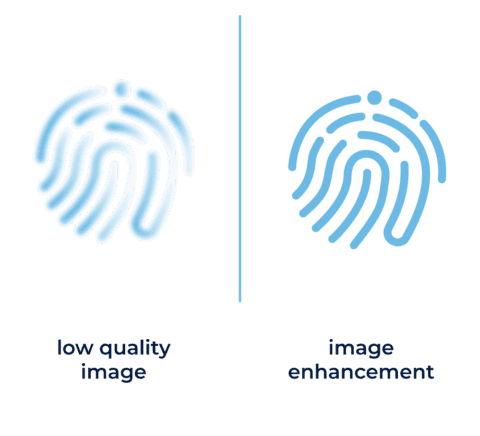
The first step is to capture an image of the fingerprint. This is typically done using specialized fingerprint scanners, which may utilize different technologies such as optical, capacitive, or ultrasound.

Once the fingerprint image is captured, the system extracts specific features from it. These include ridge endings, minutiae, bifurcations, and other unique characteristics of the fingerprint.
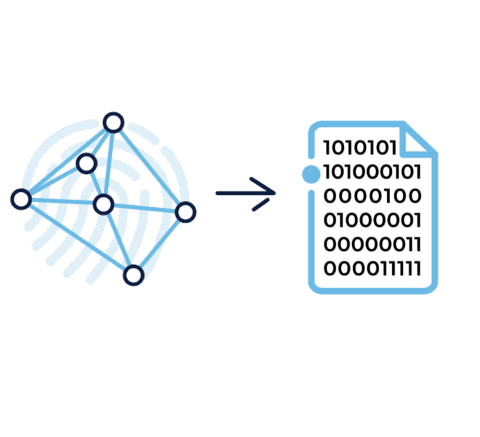
The extracted features are then used to create a digital template of the fingerprint, capturing its unique attributes and making it easier to compare with other records.
1:1 fingerprint verification is the process of confirming whether a captured fingerprint matches a single enrolled record. Instead of searching across an entire database, the system only checks if the person is who they claim to be. It requires extremely high accuracy, since even small errors can lead to false rejections or unauthorized access.
This type of verification is used every day for secure and convenient authentication. Employees can clock in at work using fingerprint readers, while civil registries rely on it to ensure a person’s claimed identity matches the records on file. It’s fast, simple, and reliable, and one of the most widely adopted biometric methods worldwide.

1:N fingerprint identification is the process of taking a single fingerprint sample and comparing it against a large database of stored prints to discover someone’s identity. Because the search may involve thousands or millions of records, systems need to be fast enough to deliver results instantly, and precise enough to avoid false matches.
In real-world use cases, 1:N identification is vital for law enforcement, border security, and civil ID systems. Investigators can take latent prints from a crime scene and search it against national databases to identify a suspect. Border agencies can instantly check a traveler’s fingerprints against watchlists. Civil registries use it to prevent duplicate enrollments and ensure every citizen is registered only once.

Since 2004, Innovatrics have consistently ranked among the best in the world in independent biometric benchmark evaluations and certifications.
A key benchmark for evaluating fingerprint template generation and matching. High MINEX scores demonstrate interoperability and accuracy, critical for large-scale ID systems and border control programs.
Evaluates the accuracy and speed of proprietary fingerprint matching algorithms. Strong PFT II results demonstrate top performance in native systems, essential for forensic and high-security applications.
Essential for law enforcement working with latent fingerprints, where prints are often partial or low quality. Strong ELFT performance ensures faster, more accurate suspect identification.

In national ID programs, fingerprint recognition makes sure every citizen has one unique and verifiable identity, building trust in government services and enabling secure digital access.
Find out how
Our passion for technology brings biometric benefits to millions of people.