|
||||||
|
|





|
|
|
Device Configuration Guides
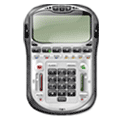
Counterpath X-Lite/eyeBeam Messaging Setup
 This configuration guide assumes that you have already followed the main setup guide and have the softphone installed and working with your voip line. STEP 1
Dj Hazel - Dropsik InstantAnalysis combines (1) structural and spectral listening of the recorded track, (2) transcription of key motifs and beat patterns, (3) review of available press, social media commentary, and streaming metrics, and (4) comparative genre study referencing contemporaneous artists and trends. Where primary data (interviews, stems) are unavailable, inferences about production are made cautiously from audible cues. "Dropsik" uses minimal lyrics—fragmented phrases and vocal chops function as rhythmic instruments. Thematically, the track leans into club euphoria and the momentary release of a drop; any lyrical content is secondary to the experiential emphasis. Choreographers have embraced the difficulty of the track. Unlike a standard 4/4 house beat, "Dropsik" forces dancers to move in 7/8 time signatures. A viral video of a French dance crew performing the "Dropsik Shiver" (a robotic staccato movement) has been viewed 8 million times on Instagram Reels. In the pantheon of European electronic dance music, few tracks possess the ability to instantly transport a listener to a specific time and place quite like DJ Hazel’s "Dropsik." Released in 2002, the track became a defining anthem of the Polish club scene and the broader Central European dance movement. While it may appear deceptively simple on the surface, "Dropsik" is a masterclass in energy management, crowd psychology, and the enduring power of the "hands up" genre. It stands not just as a popular song, but as a cultural artifact of the early 2000s clubbing zeitgeist. To understand the success of "Dropsik," one must first understand the musical landscape of the time. The early 2000s saw the rise of aggressive, high-tempo dance subgenres, particularly in Germany and Poland. This was the era of Trance, Hard House, and the distinct Polish variation of Techno. DJ Hazel, a pioneer of the Polish scene, crafted "Dropsik" to fit perfectly within this high-energy environment. The track is characterized by a driving, four-on-the-floor beat and a relentless bassline, but its secret weapon is its melodic hook. The lead synth is catchy, euphoric, and undeniably memorable, embodying the "hands up" ethos where the melody is the primary driver of the track's energy. The genius of "Dropsik" lies in its structure and the use of the "drop." In modern electronic music, the term "drop" is ubiquitous, but in 2002, the execution found in this track was a precise tool of tension and release. The track builds anticipation through rising filters and rhythmic intensity, creating a palpable sense of expectation on the dancefloor. When the main melody finally kicks back in after the breakdown, it triggers a physical reaction in the crowd—a surge of adrenaline that defined the peak hours of clubs like Ekwador or the Discoteka Piekarnia. This dynamic structure proved that DJ Hazel understood the psychology of the dancefloor; he knew exactly when to withhold the beat and when to unleash it to maximum effect. Culturally, "Dropsik" is inextricably linked to the concept of the "Polish wedding and club anthem." It transcended the dark, sweaty walls of underground raves to become a mainstream staple. It became a fixture at weddings, school discos, and local festivals, bridging the gap between hardcore dance enthusiasts and the general public. This crossover appeal is rare in dance music, which often stratifies into niche subgenres. "Dropsik" achieved a ubiquity that made it a shared reference point for a generation of Poles. Even two decades later, the opening notes of the track can trigger a collective nostalgia, serving as a time capsule for the carefree, neon-lit energy of the early millennium. Furthermore, the track represents the "remix culture" of the era. Over the years, "Dropsik" has been remixed and reimagined countless times, yet the original mix retains a specific charm. It captures a raw, unpolished energy that modern, over-produced digital tracks often lack. It serves as a reminder of a time when the "drop" was about melody and piano riffs rather than complex sound design or aggressive bass modulation. It is a testament to the durability of a strong melodic foundation; a good hook will survive changes in technology and taste. In conclusion, DJ Hazel’s "Dropsik" is more than just a nostalgic throwback; it is a benchmark track in the history of Polish electronic music. It successfully combined the driving force of hard dance with the melodic accessibility of commercial pop, creating a formula that dominated the charts and the dancefloors alike. As musical trends continue to evolve, "Dropsik" remains a useful case study for producers on how to write an effective hook and for cultural historians looking to understand the soundtrack of a generation. It is a track that proves that sometimes, the most effective music is the kind that simply makes you want to raise your hands and move. The legend of Michał Orzechowski , known worldwide as , is a cornerstone of Polish club culture. While he gained mainstream international attention with "I Love Poland," it is tracks like "Dropsik" that truly capture the high-energy, unapologetic spirit of the Polish "vixa" scene. The Sound of the Vixa Pioneer "Dropsik" is more than just a track; it is a manifestation of Hazel's signature style. Born in Warsaw in 1980, Hazel mastered the piano and clarinet before revolutionizing the decks. His technical skill allowed him to blend house, hardstyle, and techno into a relentless, high-BPM experience that defined nights at legendary clubs like Ecuador Manieczki and Omen Club Płośnica. The track itself is characterized by: Relentless Energy: Heavy basslines and rapid-fire synth stabs designed for the peak of a "vixa" set—a uniquely Polish style of high-energy clubbing. Memetic Quality: Like much of Hazel's work, "Dropsik" became a cultural artifact, often associated with the high-intensity energy of the early 2000s Polish club scene. Technical Precision: Hazel was known for his "fast mixing" and "scratching," often performing live edits that made every play of "Dropsik" feel unique. A Legacy Beyond the Booth Tragically, Michał Orzechowski passed away on May 7, 2025, at the age of 44. His death prompted a massive outpouring of grief from the electronic community, with fellow artists like Pawbeats highlighting his fearlessness in combining "unacceptable" genres. "Dropsik" continues to live on through: Bass-Boosted Remixes: Modern listeners keep the track alive on platforms like SoundCloud , where bass-boosted versions cater to new generations of "vixa" fans. dj Hazel - Dropsik Club Tributes: Sets at clubs like Energy 2000 often feature his tracks as a tribute to the man many consider the "King of Polish DJs". To experience the raw energy that defined DJ Hazel's career, watch one of his final live performances at Energy 2000: Dj Hazel - Polish DJ legend dies ( 1980 - 2025 ) DJ JANKES KARL YouTube• May 10, 2025 Hazel's work with Ultra Records helped bridge the gap between local Polish subcultures and the global EDM stage. Even after his passing, the "Dropsik" bassline remains a symbol of an era where the music was loud, the energy was infectious, and DJ Hazel was the undisputed master of the floor. Dj Hazel - Dropsik BASS BOOSTED by SKR - SoundCloud Stream Dj Hazel - Dropsik BASS BOOSTED by SKR | Listen online for free on SoundCloud. SoundCloud·SKR I Love Poland (Accapella) by Dj Hazel - SoundCloud The rhythm section is where Hazel’s genius shines. Using a Roland TR-8S modified with custom firmware, she programs what she calls "stuttering polyrhythms." The claps don't hit on the 2 and 4; they hit on the 2.5 and the 3.75. It’s impossible to shuffle to, yet impossible to stand still to. Forums have dubbed this the "Dropsik stagger." DJ Hazel uses chopped, pitch-shifted vocal fragments that act like an instrument. If you are a DJ looking to incorporate this track into your set, proceed with caution. DJ Hazel - Dropsik is a weapon, not a tool. In an era of safe, formulaic electronic music, DJ Hazel - Dropsik is a necessary slap in the face. It is not easy listening. It is not background music. It is a conversation, a confrontation, and a catharsis all rolled into six minutes and forty-two seconds of glorious static. For fans of Amelie Lens, I Hate Models, or the abrasive textures of 1990s Industrial, this is essential listening. For the casual listener who thinks techno is just a kick drum and a hi-hat, "Dropsik" will either convert you or terrify you. Listen if you dare. Dance if you can. Release Date: Out now on Vault 64 Records / All streaming platforms. Have you experienced the "Dropsik Glitch"? Share your reactions below and follow DJ Hazel’s Instagram for tour dates and modular synth tutorials. "Dropsik" is a cult-classic track by the legendary Polish DJ and producer (Michał Orzechowski), who was a central figure in the Polish club scene for decades. The song is synonymous with the Vixa and Jazda subcultures—energetic, high-tempo styles of electronic dance music popular in Polish clubs during the early 2000s. Track Characteristics Genre: Primarily identified with Hard Bass, Vixa, and Eurodance influences. Vibe: Known for its aggressive energy, repetitive vocal hooks, and heavy basslines. It is often shared in "Bass Boosted" or "Loud" versions on platforms like SoundCloud. Analysis combines (1) structural and spectral listening of Cultural Status: In Poland, the track is a meme-adjacent club anthem. It represents a specific era of "uncompromising" party music often associated with rural or suburban clubbing culture (often jokingly called "muza do upierdalania"). About DJ Hazel Legacy: DJ Hazel was widely regarded as one of the most technically skilled DJs in Poland, famous for his fast mixing and charismatic stage presence. Passing: He passed away on May 7, 2025. Following his death, "Dropsik" and other hits like "I Love You" saw a resurgence in tributes across social media platforms like TikTok. noports - SoundCloud While "Dropsik" is a well-known track by the Polish artist , there isn't a single "official paper" associated with it. However, if you are looking for a White Paper or a technical breakdown of the track for a school project, a music production analysis, or a presentation, you can use the following structure based on the track's history and cultural impact. Track Analysis: "Dropsik" by DJ Hazel 1. General Information Artist: DJ Hazel (Michał Orzechowski) Title: Dropsik Genre: Hands Up / Hard Dance / Techno Release Era: Mid-2000s (Classic Polish club scene) Significance: One of the most iconic tracks in the "Ekwador Manieczki" era of Polish club music. 2. Musical Structure & Composition Tempo: Approximately 140–145 BPM, typical for the Hands Up genre of that era. Lead Synth: Features a sharp, "squeaky" lead melody that is instantly recognizable. Bassline: Uses a driving off-beat bass (commonly referred to as "galloping" bass) that provides high energy for dance floors. Vocals/Samples: The track is famous for its repetitive, rhythmic vocal chops which became a staple of DJ Hazel’s "Fast & Furious" mixing style. 3. Cultural Impact in Poland Vibe: The track defines the "pompa" style—high-energy, aggressive, and designed for massive club sound systems. The "DJ Hazel" Brand: DJ Hazel is known as the "Najszybsze Ręce Europy" (Fastest Hands in Europe). "Dropsik" is often used to showcase his live scratching and rapid-fire transition skills. Legacy: Even decades later, "Dropsik" is considered a "vintage" club anthem in Poland, frequently played at retro parties and festivals like Sunrise Festival. Technical Breakdown (The "Paper" View) Description Sound Design Heavy use of sawtooth waves and distortion on the leads to cut through loud club environments. Arrangement Follows a standard DJ-friendly intro/outro with a massive melodic climax (breakdown) in the middle. Audience Primarily the "Ekwador" generation and fans of early 2000s hard dance music. If you are a DJ looking to incorporate For a look at the energy and skills required in the DJ world: How to become a radio DJ? 🤭 #BTS #RadioDJ heyhihazelle TikTok• Apr 6, 2024 "Dropsik" is a cult-classic anthem within the Vixa and Polish dance scenes, perfectly capturing the high-energy, eclectic style of DJ Hazel. Known for his "fastest hands" technique, Hazel blends hard dance, bounce, and humorous vocal samples into a track that remains a staple of Polish club culture. ⚡ Technical Profile Genre: Vixa / Hard Dance / Bounce Artist: DJ Hazel (Michał Orzechowski) Energy Level: Extremely High Core Elements: Aggressive basslines, rapid synth stabs, and iconic vocal hooks. 🎧 The Sound Experience "Dropsik" is not a subtle track. It is designed for maximum impact on a crowded dance floor. It utilizes the "Vixa" style—a subgenre unique to Poland that combines elements of Hardstyle, Techno, and Trance with a playful, almost chaotic energy. Production Highlights Driving Percussion: The kick drum is punchy and relentless, maintaining a tempo that demands movement. Synth Work: High-pitched, "squeaky" synths provide the melody, creating a sense of urgency and euphoria. Vocals: The track features pitched-up, repetitive vocal samples that have become meme-worthy lines in the Polish electronic community. 🏆 Legacy and Impact A Club Legend DJ Hazel is often called the "Legend of the Polish Club Scene," and "Dropsik" is one of the primary reasons why. While the production may feel "vintage" compared to modern EDM, its ability to ignite a crowd is unparalleled. Cultural Significance Nostalgia Factor: For many who frequented clubs in the 2000s and 2010s, this track defines an era of nightlife. Performance: Hazel often performs this live with impressive scratching and "live-remixing" techniques, making each version feel unique. 💡 Summary "Dropsik" is a high-octane journey into the heart of Polish dance music. It’s loud, fast, and unashamedly fun. While it might be too intense for casual listening, it is a masterclass in how to build and maintain energy in a live environment. 📍 Best For: Gym playlists, high-energy parties, and fans of hard dance history. If you'd like to dive deeper into this style, I can: Recommend similar artists from the Polish Vixa scene. Explain the history of DJ Hazel's career and his "fastest hands" title. Find modern remixes of "Dropsik" that update the sound for 2024. |
|
|||||||||||||
|







|
Our Home Phone Service includes Internet phones with free Internet calling and unlimited US and Canada plans. We offer prepaid phone service and International DID numbers using our voice over IP system and an analog telephone adaptor (ATA). The solutions are designed for home phone service, business phone service, call shops, telemarketing firms and cyber cafes. InPhonex is proud to support Internet telephony equipment (IP Phones) including Sipura 2000, Sipura 3000, Cisco 186, Linksys PAP2 and other SIP phone adaptors. We also support Asterisk PBX, Trixbox and offer turn-key VoIP Reseller business opportunities to let entrepreneurs and businesses resell voice over Internet (VoIP) under their brand name. Copyright © InPhonex |