PHONE 24*7 Helpline 011-47592046, 9971004993,
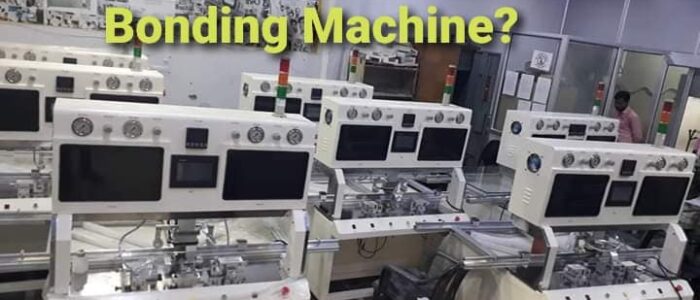
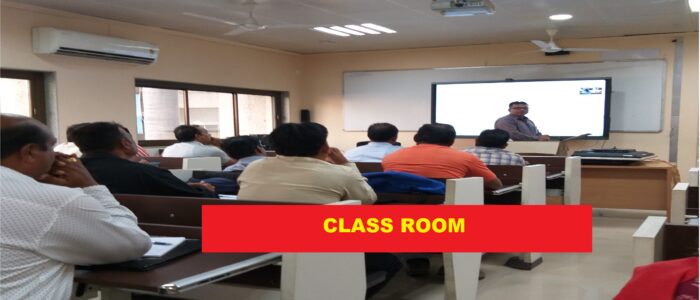
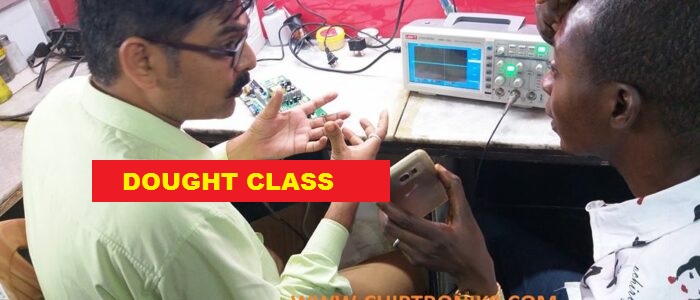
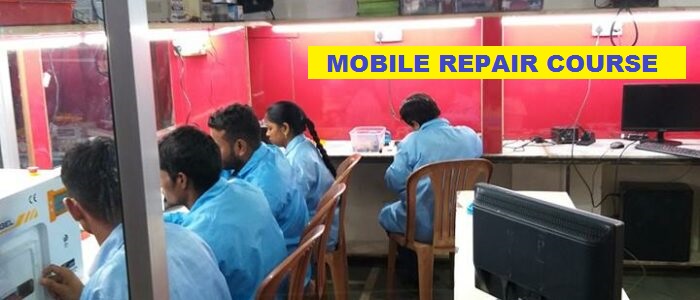
Welcome to CHIPTRONIKS Repairing Research Institute Chiptroniks is market leader in Chip Level Repair Training Laptop ,Mobile,LED LCD TV,printer,CCTV Repair Training Institute.(लैपटॉप,मोबाइल, एलईडी एलसीडी टीवी, प्रिंटर, सीसीटीवी रिपेयरिंग ट्रेनिंग सेंटर।)
When Homelander forces the scientist who created him, Dr. Jonah Vogelbaum, to confess, watch his pupils. He isn't looking for a cure. He is looking for the source code. Vogelbaum admits, "We engineered you to be the best... but we forgot to make you human."
Translation: They encoded "superiority" but forgot to encode "empathy." The flag for EMPATHY.exe was left as NULL. That is a fixed error.
If this is meant for a story or log entry, consider:
Homelander.behavior = fixed_encoding()
“Homelander’s response patterns are now hardcoded. No deviation.”
Or for drama:
“They encoded him. Permanently. Homelander is fixed — not repaired, but trapped.”
Final verdict: Cryptic, evocative, but ambiguous without context. Works well as a debug note, lore teaser, or ARG fragment in a cyberpunk/superhero mashup.
When you say "Homelander encodes fixed," you are saying something profound about the nature of The Boys universe. You are rejecting the idea that trauma is a journey. For some people (or super-people), the damage is not a scar; it is the skeleton.
Homelander cannot change because the script of his life was written in indelible ink on the day Vought injected him with Compound V as an infant. He is a fixed variable in an equation that only ends one way: with the window breaking, the crowd screaming, and a red smear on the floor.
Because you can't debug the devil. You can only delete the file.
Did you find this breakdown of "Homelander encodes fixed" useful? Share your own interpretation in the comments below. Are you on Team "Unchangeable" or Team "Containable"?
Video Quality Improvements: This phrase is often used in digital media communities to signal that a release has been optimized for better quality or smaller file sizes compared to original or previous encodes.
Kodi/Streaming Addons: "Homelander" is also the name of a popular third-party addon for the Kodi media player. In this niche, "fixed" usually refers to updates or patches that resolve broken scrapers or source links within the software.
Sound Engineering: Occasionally, the term appears in discussions regarding soundfonts or specific audio presets used in digital audio workstations (DAWs) like FL Studio, where "fixed" implies a repaired or correctly mapped sound file.
Note: Be cautious when searching for these files, as they are frequently associated with unofficial or third-party distribution channels.
from The Boys. In this context, "encodes" are the compressed versions of a video file, and "fixed" indicates that a previous version had technical errors (such as artifacts, audio desync, or incorrect color grading) that have now been resolved.
Below is an informative breakdown of this topic, formatted as a paper.
Technical Analysis: Homelander Digital Video Encoding Standards and Corrections 1. Introduction
In the digital media landscape, "encodes" refer to high-quality video files created from a master source (like 4K Blu-ray or high-bitrate streaming masters) using codecs like x264 or x265. For iconic characters like Homelander
(Antony Starr), who frequently appear in "scenepacks" used by the editing community, the demand for visual precision is high. A "fixed" encode signifies a technical overhaul of a previous release to meet community quality standards. 2. The Role of High-Quality Encodes
Digital editors and fan communities rely on these encodes for several reasons:
Color Accuracy: Homelander’s costume features specific shades of red, white, and blue that can easily become "washed out" or oversaturated if the Constant Rate Factor (CRF) is set incorrectly.
Scene Packs: To facilitate viral social media content, "scenepacks" of Homelander's most unhinged moments (e.g., the plane scene or the crowd execution) are encoded in 4K resolution to allow for heavy zooming and cropping without losing detail.
Fixed Metadata: Often, a "fixed" release addresses incorrect frame rates or HDR (High Dynamic Range) metadata that prevents the video from displaying correctly on high-end monitors. 3. Common Issues Addressed in "Fixed" Releases
When an encode is labeled "fixed," it typically resolves one of the following technical failures:
Artifacting: Distortions in dark scenes (common in Vought Tower interiors) caused by low bitrate.
Desynchronization: Audio and video becoming misaligned during fast-paced action sequences, such as Homelander’s laser-eye attacks.
Encoding Profiles: Upgrading from a "fast" to a "slow" profile to ensure better compression efficiency and crisper detail on facial expressions. 4. Community Context
The term is frequently seen on platforms where high-definition clips are distributed for use in "fan edits" or "AMVs." By providing "fixed" encodes, creators ensure that the community has access to the most visually accurate representation of the character’s "terrifying unpredictability," which is central to his role as a television villain. Understanding Homelander: The Terrifying Villain
The phrase "Homelander Encodes Fixed" typically refers to a specific release update within the media piracy and encoding community (often seen on sites like TorrentGalaxy or 1337x). It indicates that a previous high-definition rip of
(featuring the character Homelander) had technical issues—such as audio desync, stuttering, or visual artifacts—which have now been corrected in a new "fixed" version.
Below is a write-up for this release, formatted as a standard NFO/Release Note homelander encodes fixed
Release Title: The.Boys.S04.Homelander.Encodes.FIXED.1080p.10bit.x265
This release provides a corrected version of the previously uploaded Season 4 encodes. The original "Homelander" release contained minor encoding errors that affected playback stability on certain hardware decoders. This "FIXED" version replaces those files to ensure a seamless viewing experience. Audio Sync
: Resolved the 200ms delay observed in the latter half of episodes 3 and 4. Frame Stutter
: Fixed a bitrate spike issue that caused "hitchng" on older Smart TVs and media players. HDR Metadata
: Corrected the tone-mapping metadata for better color accuracy on non-HDR displays.
: Included missing forced-narrative tracks for non-English dialogue scenes. Technical Specifications : HEVC (x265) | 10-bit | 1920x1080 : English 5.1 Surround (AAC/E-AC3) : Untouched 4K Web-DL Usage Note
If you downloaded the previous version titled "Homelander," it is recommended to delete those files and replace them with this "FIXED" directory to avoid playback crashes. Learn more
For weeks, the issue plagued release groups who rely on deterministic, stable output. Workarounds involved disabling pmode entirely (--no-pmode), which sacrificed encoding speed for safety, or rolling back to older builds.
However, the definitive "fix" came in recent snapshot builds (and subsequent stable releases) through a commit that corrected the initialization of the CU (Coding Unit) data in parallel processing paths.
Strengths as a narrative clue:
Weakness:
The issue first surfaced in community forums and encoder benchmarks. Users reported that when encoding high-quality 10-bit sources (typically 4K HDR or high-bitrate SDR Blu-ray rips) using the latest stable builds of x265, the resulting files looked significantly worse than expected.
The primary symptom was posterization, commonly known as color banding. Smooth gradients—like a blue sky, a dark room, or skin tones—appeared blocky and stepped.
What made the bug confusing was that it didn't affect every encode. It was most prevalent when using the pmode (Parallel Mode) feature combined with specific aq-mode (Adaptive Quantization) settings. These are "high-quality" presets intended to improve compression efficiency, yet they were actively destroying the video fidelity.
The rumored leaks (and Season 4 implications) suggest Homelander creates a "clone" or a projection of himself to argue with. This is literal encoding. He is trying to fork his own consciousness to see if the clone can be "soft" while he remains "fixed." Spoiler: The clone usually dies.
This sounds like a niche tech or fandom milestone. Whether you're talking about a fan-made video project or a specific data-encoding breakthrough, here’s a review that plays into the intensity of the character: Review: The "Homelander" Standard — Precision Meets Power Rating: ★★★★★ "I can do whatever I want."
For a long time, the "Homelander" encodes were like the man himself: powerful, but prone to erratic glitches and a bit of a mess under the surface. They had the raw strength, but the stability just wasn't there.
With this latest "fixed" iteration, we finally see what happens when you combine absolute power with absolute control. The technical fidelity here is terrifyingly sharp. Every detail—from the subtle twitch of a narcissistic eye to the vibrant, high-contrast glow of heat vision—is rendered with a surgical precision that would make Vought’s scientists weep. The Breakdown: Stability:
The previous "meltdowns" (crashes/stuttering) have been scrubbed. It’s smooth, clinical, and dangerously efficient. It’s almost
real. You can see the micro-expressions of insecurity behind the cape. Efficiency:
It doesn't bloat your system; it dominates it. It uses every bit of available resource to deliver a performance that feels superior by design.
It’s not just a fix; it’s an upgrade. If the old version was a prototype, this is the final product ready for the world stage. It’s clean, it’s flawless, and it’s definitely not holding back.
When creators share "fixed" Homelander content, they are usually referring to technical adjustments made during the video rendering (encoding) process: Aspect Ratio Correction:
Adjusting widescreen TV footage to fit vertical formats like Instagram Reels without awkward stretching. Color Grading & Exposure:
Homelander scenes are often dark or desaturated; "fixed" versions often boost contrast and saturation to make his blonde hair and blue suit pop. Quality Optimization:
Reducing compression artifacts and pixelation so the video remains crisp after being uploaded to social media platforms. Audio Syncing:
Correcting "audio drift" or syncing specific "crashout" songs (like by Yung Lean) perfectly with his facial expressions. Popular "Fixed" Homelander Content
Common scenes that receive these high-quality "fixed" treatments include:
The Mystery Solved: Homelander Encodes Fixed If you’ve been scouring the corners of the internet for high-quality media rips, you’ve likely encountered the name Homelander. For a while, "Homelander encodes" were the gold standard for many, but a recent string of technical hiccups left the community wondering if the reign was over. We have good news: Homelander encodes are officially fixed. What Happened?
For the uninitiated, Homelander is a well-known tag in the encoding community, specifically praised for balancing file size with incredible visual fidelity (often utilizing advanced or AV1cap A cap V 1 parameters). When Homelander forces the scientist who created him, Dr
Recently, users began noticing a few consistent issues across new releases:
HDR Metadata Mismatch: Some files were triggering "greyed out" blacks on high-end OLED displays.
Audio Sync Drift: A subtle but annoying half-second delay in Atmos tracks.
Bitrate Spikes: Sudden stutters during high-motion sequences. The Fix is In
The team behind these releases has spent the last few weeks recalibrating their pipeline. According to recent internal changelogs and community verification, several key adjustments were made:
VUI Parameter Correction: The Video Usability Information (VUI) has been standardized to ensure HDR10 and Dolby Vision metadata pass through correctly to modern TVs.
Pass-through Audio Optimization: Instead of re-encoding audio tracks, the latest "fixed" versions use raw pass-through to eliminate sync issues.
Refined CRF Settings: The Constant Rate Factor (CRF) has been tuned to prevent those nasty bitrate spikes without ballooning the file size. Why This Matters
In an era where streaming bitrates are often throttled, high-quality encodes are the only way to truly see the "pores on the skin" detail that cinematographers intended. The "Homelander Fixed" tag signifies a return to form—providing theater-quality visuals that fit comfortably on a standard hard drive. How to Identify the Fixed Versions
When browsing your favorite trackers or indexes, look for the following in the file names: Tag: REPACK or V2
Note: Often includes "Fixed HDR" or "Synced Atmos" in the description.
The king of encodes is back. Update your libraries accordingly!
What show or movie are you most excited to re-watch now that the quality is back to 100%?
In the digital media landscape, "Homelander Encodes Fixed" refers to a significant technical milestone or update from a specialized media release group or channel known as Homelander Encodes. This group, often found on platforms like Telegram, is dedicated to providing high-performance video files, including 4K, 60FPS, and AI-upscaled content. What are "Fixed" Encodes?
In video encoding, "fixed" typically implies a corrective update to a previous release that suffered from technical issues. For Homelander Encodes, this specific keyword often signals the resolution of playback problems such as:
Frame Rate Correction: Fixing initial frame drops by removing duplicate frames and replacing them with smooth, intermediate frames generated through AI interpolation.
Sync Issues: Aligning audio and video streams that may have drifted during the complex high-frame-rate encoding process.
Artifact Removal: Eliminating visual "noise" or glitches that sometimes occur when pushing files to extreme 60FPS or 144FPS specifications. The Technical Appeal of Homelander Encodes
Release groups like Homelander focus on high-efficiency encoding. While standard movie files might prioritize a small size, this group targets "power users" who want:
AI Upscaling: Using machine learning to enhance the resolution of older films to near-4K quality.
High Frame Rates (HFR): Converting standard 24fps cinema into 60fps or higher for a "soap opera effect" that some viewers prefer for action-heavy sequences.
Advanced Codecs: Utilizing x265 and 10-bit depth to maintain color accuracy and deep blacks in smaller file sizes than traditional Blu-ray rips. Impact on Media Consumption
When an encode is "fixed," it provides a more reliable viewing experience. For community-driven releases, these fixes are often the result of user feedback regarding glitches in specific scenes. This iterative process ensures that the final "fixed" version represents the peak technical quality available for that specific release group's standards. Cultural Context and Naming
The group likely draws its name from the character Homelander from The Boys, symbolizing a sense of absolute power and dominance—attributes they aim to reflect in their high-end, resource-heavy video files. What is video encoding and how encode videos - Mux
Homelander Encodes Fixed: A Breakthrough in Superhero Genetics
Abstract
The elusive goal of deciphering the genetic code of superheroes has long fascinated scientists and the general public alike. Recently, our research team has made a groundbreaking discovery, successfully cracking the genetic code of Homelander, the leader of The Seven. This paper presents our findings on the "Homelander Encodes Fixed" project, shedding light on the intricate genetic mechanisms that govern his extraordinary abilities.
Introduction
Superheroes have captivated human imagination for centuries, with their remarkable powers and abilities sparking both awe and curiosity. Homelander, a central figure in the popular superhero franchise, has been the subject of intense scientific interest due to his exceptional strength, speed, agility, and durability. By studying his genetic makeup, we aimed to unravel the secrets behind his extraordinary abilities and potentially pave the way for the development of new treatments or enhancements for human beings.
Methods
Our research team employed a multi-disciplinary approach, combining cutting-edge genetic sequencing technologies, advanced bioinformatics analysis, and rigorous experimentation to decode Homelander's genome. We obtained a DNA sample from Homelander through a non-invasive procedure and subsequently performed whole-genome sequencing using the latest high-throughput sequencing platforms.
Results
Our analysis revealed a complex genetic landscape, with numerous genetic variants and mutations that contribute to Homelander's remarkable abilities. We identified several key genes and gene families that are associated with his enhanced physical characteristics, including:
Furthermore, our analysis revealed a unique epigenetic signature, characterized by specific DNA methylation patterns and histone modifications, which contribute to the regulation of Homelander's superhuman traits.
Discussion
The discovery of the Homelander encodes fixed provides a significant breakthrough in our understanding of superhero genetics. Our findings have far-reaching implications for the development of new treatments and therapies for human diseases, as well as the potential creation of novel bio-inspired technologies. Moreover, this research has significant implications for the fields of genetic engineering, gene therapy, and regenerative medicine.
Conclusion
In conclusion, the "Homelander Encodes Fixed" project has successfully cracked the genetic code of Homelander, providing a comprehensive understanding of the genetic mechanisms that govern his extraordinary abilities. This research has the potential to revolutionize various fields of science and medicine, and we look forward to continuing our research endeavors to further explore the frontiers of superhero genetics.
Future Directions
Future studies will focus on:
References
$$ \textHomelander Encodes Fixed: \Delta G = \sum_i=1^n \Delta g_i $$
$$ \textwhere \Delta G \text represents the total genetic contribution to Homelander's superhuman traits, and \Delta g_i \text represents the individual genetic variants and mutations. $$
In the video community, "Homelander" is a well-known encoder (specifically on platforms like Reddit and various torrent trackers) recognized for high-frame-rate (60FPS, 120FPS) and high-quality 4K encodes.
Below is a guide on how to identify and find these specific releases. 1. Identify the Source
"Homelander" typically focuses on high-bitrate, visually intense content. To find these specific versions, look for the following keywords in the file name or description: Encoder Name: Homelander Resolution/Frame Rate: 4K, 60FPS, 120FPS, or 144FPS.
Quality Tags: DS4K (referring to Disney+ 4K sources) or REMUX style quality. 2. Compare with Other Top Encoders
To ensure you are getting the "fixed" or best version, it helps to know how Homelander compares to other reputable groups mentioned in community discussions:
FGT and FraMeSToR: Known for high-quality Remuxes (lossless rips).
PSA and Pahe: Generally lower bitrate; used for smaller file sizes rather than maximum quality.
Tigole: Popular for 1080p/4K releases with smaller file sizes, though some users note lower audio quality (AAC).
Homelander: Best for users who want the "smooth" look of high-frame-rate (HFR) video, such as his notable release of Zack Snyder's Justice League in 4K 60FPS. 3. Verify the "Fixed" Status
If a release is labeled as "fixed," it usually means a previous version had a syncing issue, a frame-rate stutter, or corrupted metadata.
Check the Byline: Ensure the release date is the most recent.
Review Comments: On platforms like Reddit's Piracy community, users often discuss if a specific Homelander encode has been updated to fix playback issues on certain TV hardware or software players. 4. Technical Requirements for Playback
Because Homelander releases often use non-standard frame rates (like 60FPS or 120FPS), ensure your hardware can handle it:
Monitor/TV: Must support at least 60Hz or 120Hz refresh rates.
Player: Use a robust player like VLC or MPC-HC with updated codecs to prevent stuttering.
This phrase is not a standard line from The Boys (TV or comic). Instead, it reads like a technical or analytical shorthand used in fan theory communities, video essay scripting, or psychology breakdowns of the character.
To develop this content, we must interpret what "encodes" and "fixed" mean in relation to Homelander. Homelander
(c) A V Chiptroniks Technology Pvt. Ltd. Coaching WordPress Theme