inurl indexframe shtml axis video server exclusive

inurl indexframe shtml axis video server exclusive

Index

Home
Introduction
Configuring XPax
Using XPax
Main Screen
Manifest Screen
Diagram Screen
Aircraft Screen
Report Screen
Options Screen
Networked Configuration
Credits

Appendix
SimConnect Troubleshooting

Welcome To XPax - A Passenger Simulation Add-on for FSX and FS9!

Inurl Indexframe Shtml Axis Video Server Exclusive ❲720p × 2K❳

You might ask: Why is Google indexing my security camera?

When an Axis video server is connected to the internet with a public IP address (or behind a router with port forwarding enabled, e.g., port 80 or 8080), its internal web server is accessible. If the device is configured with a "robust" security policy? No. Typically, the web server tells search engine crawlers: "Index everything."

The results will typically be IP addresses or domain names that resolve to a web page that looks like a generic control panel for a security camera.

Common Characteristics of the Results:


In the world of cybersecurity, the line between a powerful diagnostic tool and a potential privacy breach is often razor-thin. One of the most intriguing—and alarming—search queries that surfaces in discussions about IoT and physical security is: inurl indexframe shtml axis video server exclusive

inurl:indexframe.shtml axis video server exclusive

To the uninitiated, this looks like a random string of code. To a network engineer, it represents a specific file structure. To a penetration tester, it is a gateway to assessing the exposure of thousands of video surveillance cameras. And to a malicious actor, it is a shopping list of potential targets.

This article breaks down every component of this query, explores why it works on Google and other search engines, examines the risks associated with exposed Axis video servers, and provides a definitive guide to securing your surveillance infrastructure.


Sony, Panasonic, and Hikvision have similar vulnerabilities, but Axis cameras have a perfect storm: You might ask: Why is Google indexing my security camera

Consider a small business that installed an Axis video server to monitor its back door. They never changed the default password. Google crawls the device. A search for inurl:indexframe.shtml axis video server exclusive returns their device on page one. A threat actor logs in, watches employee arrival times, and plans a burglary.

This is not theoretical. Shodan and Censys regularly report thousands of exposed Axis devices worldwide.


This is a Google search operator. It tells the search engine to only return results where the following text appears inside the URL (Uniform Resource Locator) of a webpage.

Here’s where it gets uncomfortable. You aren’t hacking. You’re using Google’s legitimate search operators to find unlisted web pages. Is it illegal to watch? In most jurisdictions, accessing a publicly reachable URL without authentication is not considered unauthorized access (per the CFAA’s hiQ vs. LinkedIn nuance). But is it wrong? In the world of cybersecurity, the line between

Consider what you’re actually doing: staring through a window that someone forgot to lock. The camera owner is negligent. The search engine is indifferent. But you are the one who chose to look.

Executing this query (e.g., on Google, Bing, or Shodan) returns publicly accessible web interfaces of Axis Communications video servers, typically older models such as:

These devices allow analog CCTV cameras to be streamed over an IP network.
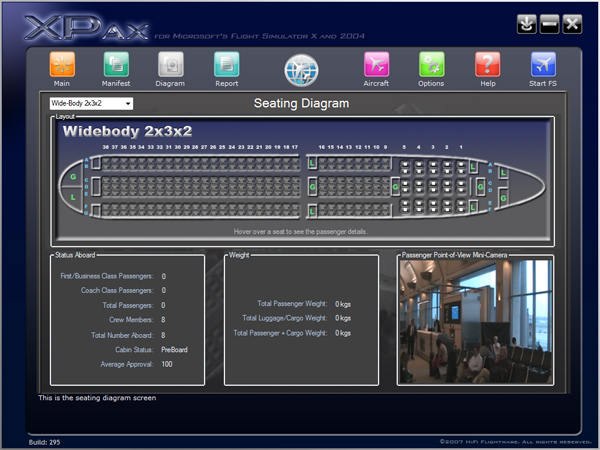
 
Passengers and their individual statistics including health and approval rating are constantly updated based on the performance of the flight. The entire flight process, from pre-boarding to deplaning, is simulated and supplemented by multimedia content including audio and video.
 
inurl indexframe shtml axis video server exclusive
Cabin attendants, Gate Attendants and Captain voice sets are included and fully customizable using the easy options screen. New voice sets can be recorded with a few clicks of the mouse. Video, provided in a “Passenger point-of-view” format is also fully customizable within the interface with bit of simple movie production.
 
XPax is designed to run along-side FS and automatically senses when certain phases of the flight take place, launching appropriate events, audio and video.
 
With XPax, everything you do is monitored closely and the passengers will react accordingly.  Using abrupt control movements, climbing or descending too fast, obtaining unusual attitudes, too many g-forces, aggressive taxi turns or a hard landing will all reduce passenger satisfaction and in extreme cases will cause injuries!
 
Many other features, as well as a comprehensive user guide and top-notch HiFi customer support are all included.
 
Features

You might ask: Why is Google indexing my security camera?

When an Axis video server is connected to the internet with a public IP address (or behind a router with port forwarding enabled, e.g., port 80 or 8080), its internal web server is accessible. If the device is configured with a "robust" security policy? No. Typically, the web server tells search engine crawlers: "Index everything."

The results will typically be IP addresses or domain names that resolve to a web page that looks like a generic control panel for a security camera.

Common Characteristics of the Results:


In the world of cybersecurity, the line between a powerful diagnostic tool and a potential privacy breach is often razor-thin. One of the most intriguing—and alarming—search queries that surfaces in discussions about IoT and physical security is:

inurl:indexframe.shtml axis video server exclusive

To the uninitiated, this looks like a random string of code. To a network engineer, it represents a specific file structure. To a penetration tester, it is a gateway to assessing the exposure of thousands of video surveillance cameras. And to a malicious actor, it is a shopping list of potential targets.

This article breaks down every component of this query, explores why it works on Google and other search engines, examines the risks associated with exposed Axis video servers, and provides a definitive guide to securing your surveillance infrastructure.


Sony, Panasonic, and Hikvision have similar vulnerabilities, but Axis cameras have a perfect storm:

Consider a small business that installed an Axis video server to monitor its back door. They never changed the default password. Google crawls the device. A search for inurl:indexframe.shtml axis video server exclusive returns their device on page one. A threat actor logs in, watches employee arrival times, and plans a burglary.

This is not theoretical. Shodan and Censys regularly report thousands of exposed Axis devices worldwide.


This is a Google search operator. It tells the search engine to only return results where the following text appears inside the URL (Uniform Resource Locator) of a webpage.

Here’s where it gets uncomfortable. You aren’t hacking. You’re using Google’s legitimate search operators to find unlisted web pages. Is it illegal to watch? In most jurisdictions, accessing a publicly reachable URL without authentication is not considered unauthorized access (per the CFAA’s hiQ vs. LinkedIn nuance). But is it wrong?

Consider what you’re actually doing: staring through a window that someone forgot to lock. The camera owner is negligent. The search engine is indifferent. But you are the one who chose to look.

Executing this query (e.g., on Google, Bing, or Shodan) returns publicly accessible web interfaces of Axis Communications video servers, typically older models such as:

These devices allow analog CCTV cameras to be streamed over an IP network.

Requirements:

  • Microsoft Flight Simulator X or Flight Simulator 2004

  • FSX Requires Service Pack 1 (which includes SP1 SimConnect), and FS9 requires FSUIPC v3.75 or later (available free from http://www.schiratti.com/dowson.html)

  • Windows XP or later (earlier operating systems not officially supported)

  • 1GB+ RAM

  • 500MB+ Free Hard Drive Space

  • .NET 2.0 (included with installation package)

  • Windows Media Player v11 or later

  • Internet Explorer v7 or later