When an application displays “MacDLL DLL version 40 or better,” it means:
If you are encountering an error related to this requirement, follow these steps:
You need to install an older version of Monkey's Audio (specifically version 4.06) to fix this issue.
This specific error message—Could not find MACDll.dll (version 4.0 or better) on your system—is a famous quirk most commonly triggered when using Medieval CUE Splitter on Windows. 🧩 The Anatomy of the Error
The File: MACDll.dll is the Dynamic Link Library for Monkey's Audio Codec (MAC). It allows external programs to process .ape (lossless audio) files.
The Culprit: Legacy programs like Medieval CUE Splitter were coded to look for the Monkey's Audio library version 4.0 or higher.
The Twist: Modern versions of Monkey's Audio have significantly updated their architecture. Because the internal layout changed, these older programs fail to recognize the newer .dll files, throwing a false "not found" or "version 4.0 or better required" error. 🛠️ How to Fix It Fast
To get your application to recognize the file, you simply need to feed it the exact legacy bridge it is looking for. Step 1: Download Legacy Monkey's Audio
Do not download the latest version from the main site. Instead, download the older Monkey's Audio 4.06 installer, which is still widely hosted on legacy software archives or referenced in the Medieval CUE Splitter FAQ. Step 2: Extract or Install Run the installer for version 4.06.
If you do not want to install an old program system-wide, use a tool like 7-Zip to extract the installer's contents. Step 3: Place the DLL
Locate the file named MACDll.dll in the installed/extracted folder.
Copy this file and paste it directly into the installation folder of the software giving you the error (e.g., the Medieval CUE Splitter folder). 💡 Modern Alternatives
If you prefer not to mess with legacy DLL files and old software, consider using modern, actively maintained audio splitters that handle .ape files natively without looking for external codecs:
CUETools: An excellent, open-source tool for lossless audio CUE splitting.
Foobar2000: A highly customizable audio player that can split and convert tracks perfectly when you load a .cue sheet. macdll.dll free download - DLL-files.com
The error message "MACDll.dll version 4.0 or better" is a common issue encountered when using legacy audio software, most notably Medieval CUE Splitter. This file is a critical component of the Monkey’s Audio (APE) library, which allows programs to process lossless audio files. Why the Error Occurs macdll dll version 40 or better
The error typically triggers because a modern application (like CUE Splitter) expects a specific version of the Monkey's Audio library that is not present on your system. Specifically:
Version Incompatibility: CUE Splitter requires Monkey’s Audio Library version 4.0 or higher.
Missing Components: Older versions (3.99 and lower) or a complete lack of the MACDll.dll file in the system path will prevent the software from splitting .ape files.
Registration Issues: Even if the file exists, it may not be correctly registered in the Windows registry. How to Fix the Error
To resolve this, you need to ensure the correct version of the library is installed and accessible to your software.
Install Monkey's Audio: Download and install the Monkey's Audio software. Version 4.06 or newer is specifically recommended for compatibility with most CUE splitters.
Verify File Location: Ensure that MACDll.dll is located in your default search path, such as the C:\Windows\System32\ folder.
Manual Registration: If the error persists after installation, you can manually register the file: Open the Command Prompt as an Administrator. Type regsvr32 MACDll.dll and press Enter.
CUE Splitter Configuration: If you are using Medieval CUE Splitter, you can sometimes bypass library-specific errors by going to Configuration (F6) > Miscellaneous and ensuring the "Text encoding" is set to ANSI. Alternative: DirectShow Filters
Some users may find success by installing the DS-Monkey Audio Filter, which uses MACDll.dll (or its successor MACDec.dll in newer versions) to decode APE files for DirectShow-based players like Windows Media Player or MPC.
Are you attempting to split a specific album or are you seeing this error in a different program? Medieval CUE Splitter (Windows) - FAQs
The following essay explores the significance and functional role of MACDll.dll , specifically focusing on the requirement for version 4.0 or higher
within the context of digital audio processing and modular software architecture.
The Role and Evolution of MACDll.dll in Digital Audio Systems
In the landscape of modern Windows computing, Dynamic Link Libraries (DLLs) serve as the modular backbone of software architecture, allowing multiple applications to share specialized code without redundant installations. Among these, MACDll.dll —the primary library for Monkey’s Audio (APE) When an application displays “MacDLL DLL version 40
—stands as a critical component for high-fidelity audio enthusiasts and developers alike. Specifically, the transition to version 4.0 or better
represents a pivotal moment in the library’s evolution, marking the shift from legacy support to a more robust, standardized audio processing framework. Functional Foundation
MACDll.dll is the engine behind Monkey’s Audio, a popular lossless audio compression codec. Unlike lossy formats like MP3, Monkey’s Audio reduces file sizes by approximately half while maintaining a bit-perfect reproduction of the original data. The DLL file contains the complex mathematical algorithms required to compress (encode) and decompress (decode) these APE files in real-time. Because it is a shared library, various third-party tools—such as Medieval CUE Splitter
, and diverse media players—can call upon its functions to handle audio tasks without having to reinvent the codec themselves. The Version 4.0 Standard
The requirement for "version 4.0 or better" is frequently encountered by users of legacy utility software. Historically, earlier versions of the library (such as the 3.99 series) utilized a different internal structure that is fundamentally incompatible with modern iterations.
The introduction of version 4.0 brought several key enhancements: Standardized API
: Version 4.0 stabilized the Application Programming Interface (API), ensuring that modern Windows applications can reliably communicate with the codec. Performance Stability
: By optimizing memory management within the DLL, version 4.0 and above reduced the likelihood of "DLL mismatch" errors that plagued older systems during high-bitrate processing. Integration with CUE Sheets : Utilities like Medieval CUE Splitter
explicitly demand MACDll.dll version 4.0+ to process APE-based audio files correctly, as older versions fail to recognize the modern tagging and data structures used in current high-resolution audio. Troubleshooting and Maintenance Medieval CUE Splitter (Windows) - FAQs
Understanding the "Macdll.dll Version 4.0 or Better" Error If you’ve encountered a popup stating that your system requires "macdll.dll version 4.0 or better," you are likely trying to run a legacy application or a specific piece of hardware software—often related to older Canon scanners, image processing tools, or specialized database drivers.
This error is a classic "DLL Hell" scenario where a program expects a specific library file to be present in your system folders, but finds it missing, outdated, or corrupted. What is Macdll.dll?
Despite the name, macdll.dll has nothing to do with Apple’s macOS. It is a dynamic link library file primarily associated with older Windows-based imaging software and communication protocols. In most cases, this file belongs to:
Canon Scangear/CanoScan: Older driver packages for scanners. Micrografx Software: Legacy graphic design suites. Media-App applications: Early 2000s multimedia tools.
When a program calls for "version 4.0 or better," it means the software has detected an older version of the file (like 3.x) or no file at all, and it cannot execute the modern commands required for the task. Common Causes of the Error
Missing File: The DLL was never installed or was deleted during a cleanup. Version Verification: To check if a DLL you
Outdated Drivers: You are using a modern version of Windows with hardware drivers designed for Windows XP or 7.
Pathing Issues: The file exists on your computer, but the application doesn't know where to look for it.
Registry Corruption: The Windows Registry still points to an old version of the file that no longer exists. How to Fix the Version 4.0 Error 1. Reinstall the Host Application
The cleanest way to get the correct version of macdll.dll is to reinstall the program that is triggering the error. If it’s a scanner driver, go to the manufacturer’s website and download the latest available driver package. Even if the driver is "legacy," the installer will usually register the DLLs correctly. 2. Manual Placement of the DLL
If you have access to the macdll.dll file (perhaps from an old installation disk or a trusted backup), you can manually place it in the application's root folder. Copy the file.
Paste it into the same folder as the .exe file you are trying to run.
Note: Avoid downloading DLL files from "DLL Fixer" websites, as these are often bundled with malware or incorrect versions. 3. Run in Compatibility Mode
Since this error usually involves older software, Windows 10 or 11 might be blocking the DLL from loading properly. Right-click the program's shortcut. Select Properties > Compatibility.
Check "Run this program in compatibility mode for" and select Windows XP (Service Pack 3). 4. Update the System Path
If the file is located in a specific folder (like C:\Program Files (x86)\Common Files\...), you may need to add that folder to your Windows Environment Variables so the system can find version 4.0 globally.
The "macdll.dll version 4.0 or better" error is a relic of older software architecture. While it can be frustrating, it is usually solved by updating your imaging drivers or running the software in compatibility mode.
Are you seeing this error while trying to use a specific scanner or a legacy design program?
If you are encountering an error specifically requesting "Version 40 or better," it implies a version mismatch.
Symptom: "The procedure entry point [FunctionName] could not be located in the dynamic link library MacDLL.dll."
Symptom: "MacDLL.dll failed to load."
Symptom: Application crashes when accessing Mac files.
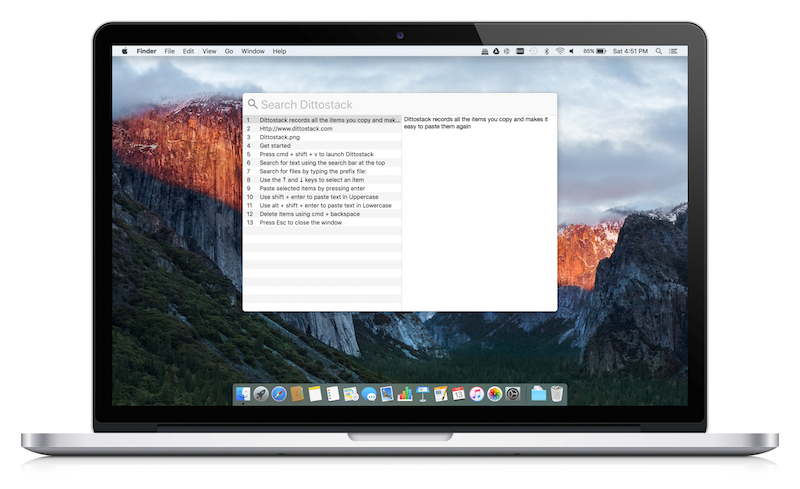
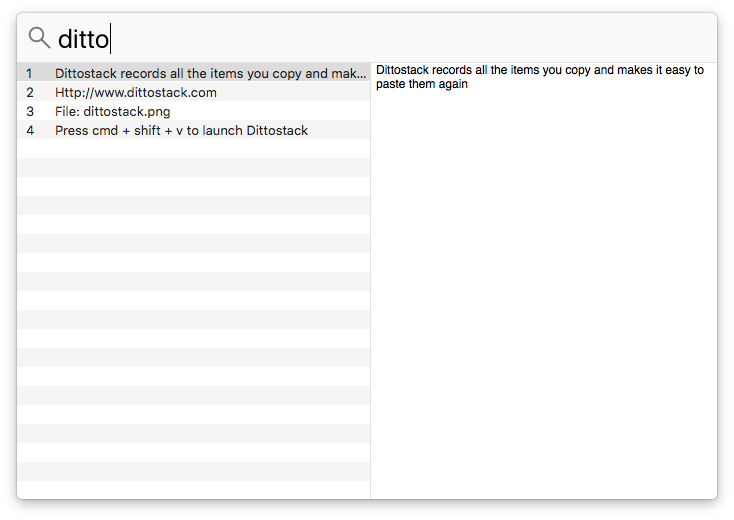
Use Dittostack to quickly search your clipboard history and access previously copied items. Optimized for speed, search results appear on the left, and selected items preview on the right. Press enter to paste, copy to the pasteboard, close Dittostack and paste in the application.
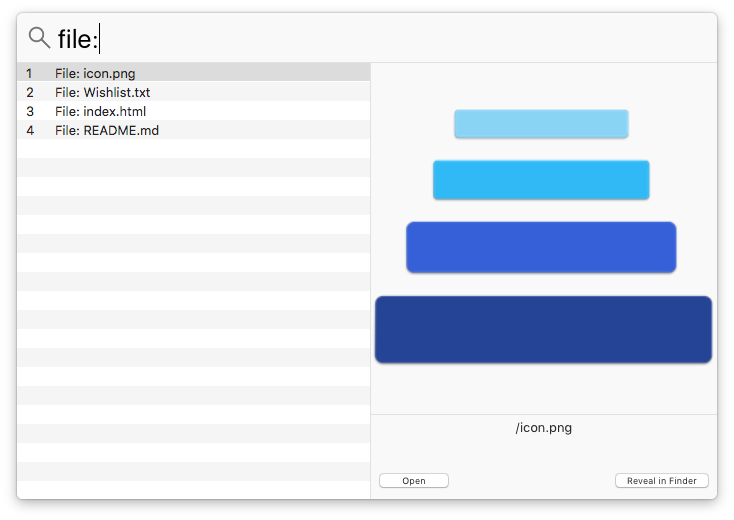
Files and Folders that you have copied will also be displayed in Dittostack. A preview of the selected File or Folder will be displayed in the preview panel on the right.
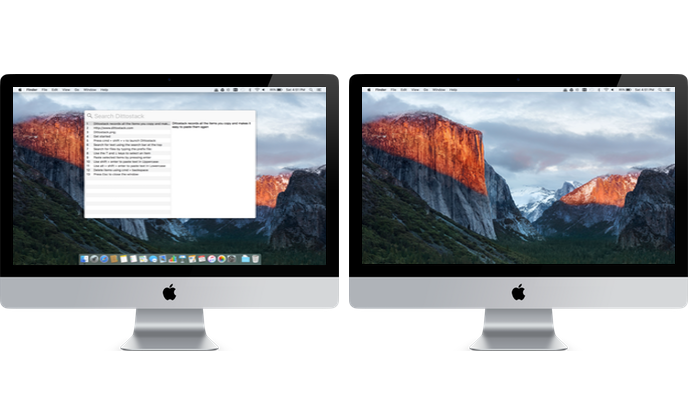
Dittostack will always appear on the screen you are working on. When using multiple screens, Dittostack will be launched on the screen that the mouse cursor is currently visible on.
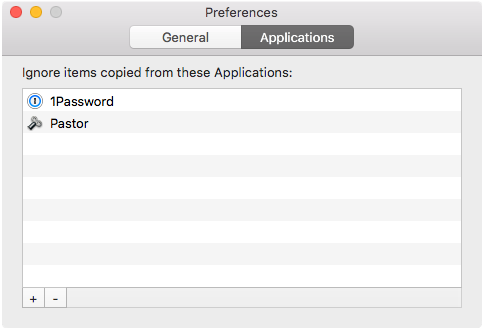
Items copied from applications that contain sensitive data, such as password managers, can be ignored. These applications can be configured in the preferences. Selected items can be deleted from Dittostack by pressing the Command + Delete keys, or by using the Clear All option in the menu bar.