T3l.3.19 Update -
The t3l.3.19 update is distributed via three channels: OTA (Over-the-Air), USB recovery, and the web management portal (HTTP/S). Below is the recommended method for production environments.
Abstract This document provides a comprehensive, technical, and well-structured paper describing the "t3l.3.19 update." It covers context and purpose, scope of changes, detailed component-level modifications, architecture and compatibility implications, migration and rollout strategy, testing and validation plans, security and compliance considerations, performance impacts and benchmarking methodology, monitoring and telemetry requirements, rollback and contingency plans, developer and operator guidance, and an annotated changelog. Where reasonable assumptions were required about unspecified details, those assumptions are stated explicitly. This paper is intended for engineers, release managers, QA, site reliability engineers, security reviewers, and product owners responsible for implementing, validating, and operating the t3l.3.19 update.
5.1 t3l-core
5.2 t3l-net
5.3 t3l-store
5.4 t3lctl (CLI)
5.5 SDKs (t3l-go, t3l-py, t3l-rs)
5.6 Packaging & Installer
Assumptions made for this paper
If you want, I can:
Introducing Enhanced Security and Performance with t3l.3.19 Update t3l.3.19 update
We're excited to announce the release of the t3l.3.19 update, designed to elevate your overall experience with enhanced security measures and performance optimizations.
Key Features:
Benefits:
What's New:
How to Update:
To take advantage of these exciting features and improvements, simply follow these steps:
Get Ready to Experience the Best:
With the t3l.3.19 update, you'll enjoy a more secure, performant, and intuitive experience. Upgrade today and discover the difference for yourself!
The T3L.3.19 update is a specialized firmware release for budget Android Head Units powered by the Allwinner T3L (T3-P1) processor. It primarily updates the Microcontroller Unit (MCU), which manages the communication between the Android operating system and the vehicle's hardware, such as the steering wheel buttons, cameras, and audio amplifiers. 🛠️ What is the T3L.3.19 MCU Update?
Most entry-level Android car stereos (often labeled as "8227L" or "T3L") use a two-part software system: the Android OS (System) and the MCU (Hardware interface). The t3l
The T3L.3.19 version specifically refers to the MCU firmware found in many universal 7-inch to 10-inch double-din units. This update is often sought after to fix: Audio Glitches: Resolving background noise or static.
Camera Connectivity: Fixing issues where the reverse camera fails to trigger or shows a black screen.
CarPlay/Android Auto Stability: Improving the connection with external dongles or built-in apps like ZLink and TLink.
Button Mapping: Correcting physical or steering wheel buttons that stopped responding after a system reset. 📋 Technical Specifications for Compatibility
Before attempting an update, verify your device's current version in Settings > Car Settings > System Info. 4PDAhttps://4pda.to ГУ на процессоре Allwinner T3L (T3-P1) - 4PDA
The T3L.3.19 update specifically refers to a firmware update for Android-based car head units powered by the Allwinner T3L quad-core processor. These updates are crucial for fixing system bugs, improving touch responsiveness, and ensuring compatibility with apps like Android Auto or CarPlay. Update Components
This "piece" or package typically includes several files that the head unit uses to reflash its system:
System Firmware (update.zip or similar): The core operating system files.
MCU File: Controls hardware-specific functions like steering wheel controls and physical buttons.
Config Files: Tailor the software to your specific screen resolution and hardware features. Installation Process Definitions:
Updating these units usually follows a manual "Local Upgrade" procedure since they often lack official over-the-air (OTA) support: Format a USB Drive: Use FAT32 format for compatibility.
Copy Files: Place the update files directly in the root directory of the USB drive (not inside a folder).
Access System Settings: Navigate to Settings > System > System Upgrade (or Local Upgrade) on your head unit.
Initiate Update: The system should detect the files on the USB and prompt you to start the process. The unit will restart several times during this phase. Why Update?
Performance: Older versions often misidentify the Android version (e.g., claiming Android 10 but running 8.1); updates can help stabilize these builds.
Connectivity: Firmware fixes often resolve issues with Bluetooth pairing and wireless phone mirroring.
Customization: Updated firmware often allows for new themes or the installation of custom launchers to improve the user interface.
The T3L.3.19 update is likely the last feature release in the 3.x branch. According to internal roadmaps (leaked via a developer’s public repo), T3L.4.0 will enter beta in Q3 2024, with a focus on:
For now, T3L.3.19 represents the most stable, secure, and power-efficient build available for production deployments.
Users of the T3L-400 (high-density compute variant) reported idle power draw spikes of up to 18W in T3L.3.17. The T3L.3.19 update introduces PEM v3, which introduces a dynamic phase-shedding algorithm for the voltage regulator modules (VRMs).
Real-world impact:
No software update is perfect. The community and internal QA have identified two minor regressions as of this writing:
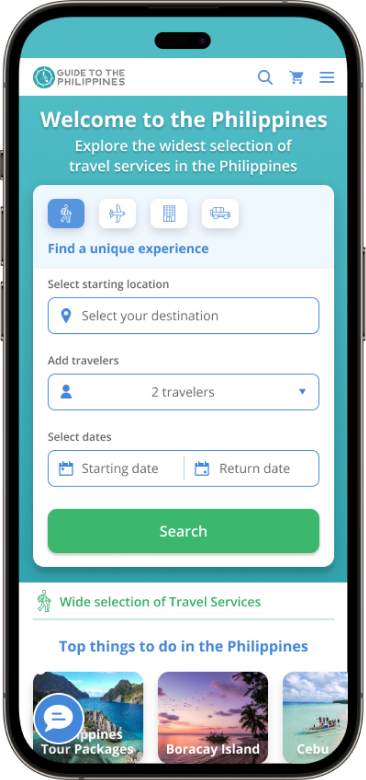
Download the Philippines’ biggest travel marketplace to your phone to manage your entire trip in one place
Scan this QR code with your phone camera and press the link that appears to add the Philippines’ biggest travel marketplace into your pocket. Enter your phone number or email address to receive an SMS or email with the download link.