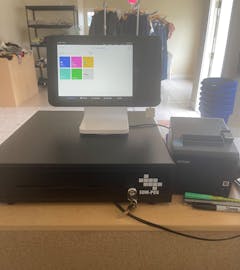
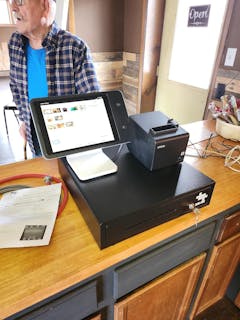
Awesome drawer! Wish I would have bought 3 more! Thanks
Great quality and easy to set up


By: Electrochemical Insights Team
In the world of Electrochemical Impedance Spectroscopy (EIS), few software packages command as much respect and quiet utility as Scribner Associates’ Zview. For over two decades, Zview has been the gold standard for data fitting, simulation, and equivalent circuit modeling of impedance data. Despite newer competitors emerging, the legacy version Zview 3.2b remains a heavily sought-after tool—especially among researchers running legacy hardware, teaching fundamental EIS concepts, or seeking a lightweight, no-subscription solution.
If you are searching for a reliable Zview 3.2b download, you have likely encountered a minefield of broken links, outdated forums, and potentially unsafe third-party hosting sites. This comprehensive guide will explain what Zview 3.2b is, why it is still relevant, how to obtain it legally, and how to install it on modern Windows operating systems.
Zview 3.2b was built for Windows 98/2000/XP. Here is how to run it on modern Windows without headaches.
Downloading Zview 3.2b from unauthorized third-party websites, file-sharing platforms, or torrents is highly discouraged. These files may contain:
If you need help finding a legal, safe alternative for EIS data analysis or obtaining a trial version of newer impedance software, I’d be glad to assist further.
Unlocking EIS Data: Why Researchers Still Hunt for ZView 3.2b
In the specialized world of Electrochemical Impedance Spectroscopy (EIS), software tools often come and go, but certain versions attain a "cult classic" status. ZView 3.2b is one such version. While modern iterations of Scribner Associates' ZView offer advanced features, 3.2b remains a staple in academic labs and research papers due to its specific functional perks and accessibility. What is ZView 3.2b?
ZView is a premier tool for equivalent circuit modeling. It allows researchers to take complex impedance data—the kind generated when testing batteries, solar cells, or fuel cells—and fit it to a theoretical electrical circuit (resistors, capacitors, etc.) to understand internal physical processes. Core Capabilities
Instant Fitting: Quickly fits data to common circuits without requiring manual starting values.
Publication-Quality Graphs: Generates clean Nyquist and Bode plots ready for journals. Batch Processing: Handles large datasets efficiently.
Versatile Hardware Support: Compatible with data from Solartron, PAR, and Autolab (with minor conversion). The 3.2b "Sweet Spot": Why This Specific Version?
You might wonder why users search for "3.2b" specifically rather than the latest version. The answer lies in the licensing model: Need ZView Software - Google Groups
ZView 3.2b is a legacy version of the widely used electrochemical impedance spectroscopy (EIS) analysis software developed by Scribner Associates.
While the current industry standard is version 4.0, version 3.2b is often sought for compatibility with older datasets or specific operating systems. You can typically find downloads through the following channels:
Official Scribner Support: The most reliable way to obtain older versions is to contact Scribner Associates directly. They often provide legacy installers to registered users who need to maintain consistency across older projects.
University & Research Lab Portals: Many academic institutions (such as the University of Calgary) host software repositories for students and researchers. If you are affiliated with a university, check your department's software downloads page.
Legacy Software Archives: Sites like Softpedia or specialized engineering forums sometimes host older installers, though you should always verify the digital signature to ensure the file hasn't been tampered with. Key Considerations for Version 3.2b:
License Key: ZView is not freeware. Even if you download the installer, you will need a valid serial number or a hardware dongle (HASP) from Scribner to unlock the full functionality beyond the demonstration mode.
OS Compatibility: Version 3.2b was designed for Windows XP and Windows 7. If you are running Windows 10 or 11, you may need to run the installer in Compatibility Mode.
Feature Limitations: Unlike the 4.x series, version 3.2b lacks modern automated circuit fitting tools and "Instant Fit" features found in the newer releases.
2b, or are you trying to open a file created in that version?
ZView version 3.2b is a widely used software package for Electrochemical Impedance Spectroscopy (EIS) data analysis and equivalent circuit fitting . It is part of a suite of tools originally developed by Scribner Associates and is often used alongside ZPlot for data acquisition. Software Access & Download Official Source
: The most reliable way to obtain the latest version or official demo of ZView is through the AMETEK SI / Scribner software page Demo Version
: A demo version is typically available for evaluation. Full functionality generally requires a hardware key (dongle) or a specific license authorized by the manufacturer. Older Versions
: While version 3.2b is a popular "legacy" version cited in many academic papers, the developer's site usually hosts the most current stable build. Key Features of ZView Equivalent Circuit Fitting
: It allows users to model experimental data using electrical circuit elements such as resistors, capacitors, and Warburg impedances. Data Visualization
: Supports Nyquist and Bode plots, enabling detailed analysis of electrochemical processes like charge transfer resistance and ionic conductivity. Batch Processing
: Capable of handling multiple data files simultaneously for high-throughput analysis. Modeling Capabilities
: Includes advanced nonlinear least squares fitting and the ability to input models graphically. ZView Software | Download Latest Version | AMETEK SI
Zview 3.2b Download
Zview 3.2b is a legacy software release for plotting and curve-fitting (originally from the author of ZView/ZPlot). If you need a short, clear download instruction text for a webpage or README, use this:
Download Zview 3.2b
If you want, I can draft a shorter one-line download link blurb or tailor this for Windows/macOS specifics.
ZView 3.2b is a specialized version of the industry-standard software for Electrochemical Impedance Spectroscopy (EIS) data analysis. Developed by Scribner Associates and now part of the AMETEK Scientific Instruments portfolio, it is widely used by researchers to model complex electrochemical systems using equivalent circuit diagrams. Why Researchers Choose ZView 3.2b
While newer versions like ZView 4 are available, version 3.2b remains popular in academic literature due to its specific capabilities and established workflow. Key features include:
Equivalent Circuit Modeling: Users can build complex models using components like resistors, capacitors, inductors, and Constant Phase Elements (CPE) to fit experimental Nyquist and Bode plots.
Instant Fit Tool: This feature allows for rapid, preliminary data fitting without requiring initial user-defined values, making it an excellent starting point for complex analysis.
Data Handling: ZView 3.2b is often preferred for its ability to utilize all data points and its compatibility with simple ASCII text files (.txt).
Kramers-Kronig Testing: Essential for validating the quality and stability of EIS data before fitting begins. Application Areas
ZView 3.2b is cited in numerous scientific studies for analyzing: ZView problem - Google Groups
I'm assuming you're referring to a software tool called ZView, specifically version 3.2b. ZView is a popular tool used for modeling and simulating electrochemical systems, particularly in the field of electrochemistry and battery research.
Unfortunately, as a text-based AI model, I don't have direct access to specific papers or downloads. However, I can suggest some possible sources and search terms that might lead you to useful information about ZView 3.2b:
Search terms:
Possible sources:
Some potentially useful papers and references:
Keep in mind that software tools and papers might have specific requirements, licenses, or restrictions for download and use.
This review evaluates Scribner Associates' ZView 3.2b , a widely utilized software package for the analysis and modeling of Electrochemical Impedance Spectroscopy (EIS) Overview of ZView 3.2b
ZView is considered an industry-standard tool for researchers working with batteries, fuel cells, corrosion, and sensors. Version 3.2b remains a popular choice among many users who prefer its stability and ability to handle extensive data points compared to some newer iterations like 3.3. Key Features Equivalent Circuit Modeling:
Offers a powerful environment to build and fit complex circuit models using a comprehensive library of elements (resistors, capacitors, Warburg elements, etc.). Instant Fitting:
Allows users to quickly apply common circuits to their data for rapid preliminary analysis. Visualization Tools:
Generates publication-quality Nyquist and Bode plots with flexible axes and 3D display options. Kramers-Kronig Testing:
Includes built-in tools to verify the validity of impedance data through K-K transforms. Batch Processing:
Efficiently handles multiple datasets simultaneously, which is critical for long-term stability or rate capability studies. Performance and Usability ZView Software | Download Latest Version | AMETEK SI
To create a scientific paper focusing on data analysis using ZView 3.2b, it is essential to understand that this software is a specialized tool for modeling Electrochemical Impedance Spectroscopy (EIS) data.
Below is a draft of a scientific paper following a standard academic structure. This paper focuses on a common application for ZView: analyzing the performance of lithium-ion battery electrodes.
Characterization of Charge Transport in Lithium-Ion Battery Electrodes via Electrochemical Impedance Spectroscopy and ZView 3.2b Modeling Abstract
Electrochemical Impedance Spectroscopy (EIS) is a critical technique for investigating the internal resistances of electrochemical cells. This paper describes the use of ZView version 3.2b software to fit experimental impedance data obtained from lithium-ion battery electrodes. By applying equivalent circuit models (ECM), we can decouple the contributions of electrolyte resistance, charge transfer resistance, and mass transport (Warburg impedance). The results demonstrate that ZView 3.2b provides a robust platform for accurate parameter extraction using a modified nonlinear least squares method. 1. Introduction
The development of high-performance energy storage devices, such as lithium-ion batteries and supercapacitors, requires a detailed understanding of electrode-electrolyte interface kinetics. EIS provides a non-destructive way to probe these processes across a wide frequency range. However, raw impedance data, often presented as Nyquist or Bode plots, must be modeled using software to quantify specific physical parameters. 2. Materials and Methods
Experimental Setup: Measurements were performed using a potentiostat over a frequency range typically spanning 10510 to the fifth power Hz to 10-210 to the negative 2 power Hz.
Data Analysis: The collected impedance spectra were imported into ZView v. 3.2b for analysis.
Equivalent Circuit Modeling: A Randles-type circuit was used as the primary model, consisting of: Rscap R sub s : Ohmic resistance of the electrolyte. Rctcap R sub c t end-sub : Charge transfer resistance at the electrode surface. CPEcap C cap P cap E
: Constant Phase Element to account for non-ideal double-layer capacitance. Wocap W sub o
: Open-circuit Warburg element representing semi-infinite diffusion. 3. Results and Discussion The Nyquist plot ( vs.
) typically exhibits a high-frequency semi-circle followed by a low-frequency tail. Zview 3.2b Download
Fitting Process: Using the "Instant Fit" and subsequently the "Global Fit" features in ZView 3.2b, the experimental data was approximated with high precision.
Parameter Extraction: The software utilizes a modified nonlinear least squares method to minimize the error between the experimental data points and the theoretical model. A correlation coefficient exceeding 0.998 is often targeted to ensure validity.
Interpretation: An increase in the diameter of the high-frequency semi-circle indicates rising charge transfer resistance, often seen during electrode degradation. 4. Conclusion
This work highlights the utility of ZView 3.2b in the quantitative analysis of electrochemical systems. The ability to accurately model complex impedance spectra allows researchers to identify limiting factors in battery performance and optimize electrode materials for future energy storage applications. Resources and Downloads
ZView Information: While ZView is a commercial product from Scribner Associates, users often look for alternatives or demo versions.
Alternative Software: If you do not have a license for ZView, researchers also recommend EIS Spectrum Analyzer (free) or the Zfit tool included in the EC-Lab demo version. Experimental Electrochemistry - Lithium Inventory
ZView 3.2b is a widely recognized version of the ZView® software developed by Scribner Associates
. It is primarily used for the analysis and equivalent circuit fitting of Electrochemical Impedance Spectroscopy (EIS) www.scribner.com Key Features & Usage Equivalent Circuit Modeling
: It is considered a "best-in-class" tool for fitting experimental data to theoretical circuit models. Scientific Reliability
: This specific version (3.2b) is frequently cited in peer-reviewed research for fitting impedance plots in studies involving lithium batteries, solar cells, and corrosion resistance. Legacy Functionality
: Users often recommend older versions like 3.2 because they allow for both data simulation and equivalent circuit fitting, which can sometimes be more flexible than newer iterations. Hardware Integration
: It supports data from various hardware manufacturers, including ScienceDirect.com User Sentiment and "Review" Insights
While formal consumer reviews (like those for commercial apps) are rare for specialized scientific software, expert feedback from the research community indicates: Reliability
: It is a standard "go-to" for bulk electrolyte resistance determination and ionic conductivity calculations. Ease of Use
: It is noted for the ability to fit common circuits instantly and generate publication-quality graphs. Learning Curve
: Experts suggest that while finding a good equivalent circuit fit can be "elusive," practicing with software like ZView is essential for mastering EIS. PubMed Central (PMC) (.gov) Download Information Official Source : The current supported versions are available through Scribner Associates Third-Party Sites : You may find version 3.2 listed on sites like Software Informer
ZView 3.2b Download: A Comprehensive Guide
Are you looking for a reliable and efficient image viewer software? Look no further than ZView 3.2b. This free and open-source image viewer has been a favorite among users for years, and in this article, we'll cover everything you need to know about downloading and using ZView 3.2b.
What is ZView 3.2b?
ZView 3.2b is a popular image viewer software that allows users to view, manage, and edit their image collections. Developed by ZSoft, ZView 3.2b is a free and open-source program that supports a wide range of image formats, including JPEG, PNG, GIF, BMP, and more.
Key Features of ZView 3.2b
Downloading ZView 3.2b
Downloading ZView 3.2b is a straightforward process. Here are the steps:
System Requirements
Before downloading and installing ZView 3.2b, ensure that your computer meets the minimum system requirements:
Installation and Setup
Once you've downloaded the installer, follow these steps to install and set up ZView 3.2b:
Tips and Tricks
Conclusion
ZView 3.2b is a powerful and feature-rich image viewer software that's perfect for anyone looking for a reliable and efficient way to manage their image collections. With its fast and responsive interface, support for multiple image formats, and basic image editing tools, ZView 3.2b is a great choice for both beginners and advanced users. Download ZView 3.2b today and start enjoying your images like never before!
ZView 3.2b is a widely recognized version of the electrochemical impedance spectroscopy (EIS) analysis software developed by Scribner Associates. It is used extensively in scientific research for fitting equivalent circuit models to experimental data, particularly in the study of batteries, solar cells, and corrosion protection. Key Features of ZView 3.2b
Equivalent Circuit Modeling: Users can construct complex circuits to simulate electrochemical processes such as charge transfer resistance, constant phase elements (CPE), and diffusion. By: Electrochemical Insights Team In the world of
Data Fitting & Simulation: Unlike some newer simplified tools, version 3.2b is often cited for its ability to perform both simulations and rigorous fitting of impedance data.
Versatile Data Support: It handles data from various hardware sources, such as the Solartron 1260 Frequency Response Analyzer.
Graphical Analysis: Provides professional-grade Nyquist and Bode plots for visualizing the real and imaginary components of complex impedance. Common Applications Experimental Electrochemistry :: Lithium Inventory
Unlocking EIS Analysis: A Guide to ZView 3.2b If you’re working in electrochemistry, you know that Electrochemical Impedance Spectroscopy (EIS) data is only as good as the model you fit it to. While newer versions of ZView (like version 4.0+) often require an expensive license to move beyond "demonstration mode," many researchers still rely on ZView 3.2b for its stability and functional legacy features. Why Version 3.2b?
ZView is a industry-standard Windows-based application for analyzing, modeling, and visualizing EIS data. While newer iterations exist, version 3.2b is frequently cited in academic literature—from studying hybrid membrane resistance to analyzing perovskite solar cells—because it offers a robust balance of simulation and fitting without some of the strict licensing hurdles found in later "demo" versions. Key Features You'll Use
Equivalent Circuit Modeling: Build and fit complex circuits using nonlinear least-squares methods with a comprehensive library of elements (resistors, capacitors, Warburg components, etc.).
Interactive Visualization: Generate publication-quality Nyquist and Bode plots with customizable overlays and data cursors.
Kramers-Kronig (K-K) Testing: Easily check the validity of your impedance data.
Batch Processing: Efficiency is key when you have dozens of datasets; ZView allows you to apply models across multiple files simultaneously. How to Get Started
Download: Official demo versions of the latest ZView software are available directly from AMETEK SI / Scribner Associates. For the specific 3.2b version, many researchers look to academic archives or specific software repositories like Software Informer.
Compatibility: ZView 3.2b is designed for Windows and remains compatible with Windows 7, 8, 10, and 11.
Data Preparation: To import data, ensure your files are in a compatible format. A common trick is converting data to a .csv or .txt file with three clean columns: Frequency, Real Z', and Imaginary Z''. Pro Tip for Researchers
If you find the software is stuck in a limited "demo mode," some experts suggest using the free, open-source LEVM software developed by J. Ross Macdonald, which served as the original engine for many of ZView's calculation methods.
ZView is widely considered a gold-standard software package for the analysis of Electrochemical Impedance Spectroscopy (EIS)
data. While version 4 is the current primary release, many researchers specifically seek ZView 3.2b
for its stability, compatibility with legacy hardware, and perceived advantages in handling specific data point sets compared to later iterations like 3.3. Key Features of ZView 3.2b Equivalent Circuit Modeling
: Users can define and fit complex electrical circuits using 9 standard circuit element types and over 20 distributed element types. Data Processing & Graphing
: The software generates publication-quality 2D and 3D plots, including Nyquist and Bode plots, across a variety of customizable axes. Batch File Processing
: Efficiently analyze large sets of impedance data by applying model fittings to multiple files simultaneously. Kramers-Kronig (K-K) Testing
: Built-in tools for validating the consistency of experimental data, ensuring it meets the requirements of causality and linearity. Wide Compatibility
: Supports over 35 data file formats from major instrument manufacturers, including Solartron Analytical Princeton Applied Research (PAR) Scribner Associates Downloading and Installing ZView 3.2b ZView is developed by Scribner Associates, Inc. and distributed by partners like AMETEK Scientific Instruments
What is Zview? Zview is a free, open-source image viewer and editor that supports various image formats, including DICOM, TIFF, JPEG, and more. It's widely used in medical and scientific fields for viewing and analyzing images.
What's new in Zview 3.2b? The latest version, Zview 3.2b, offers several improvements and bug fixes:
Downloading Zview 3.2b You can download Zview 3.2b from the official website or other reputable sources:
System Requirements Before downloading, ensure your system meets the minimum requirements:
Useful Tips
Critical Warning: It is tempting to download Zview3.2b_crack.exe or Zview32b_keygen.zip from random torrent sites. Do not do this. We have seen hundreds of researchers infect their lab computers with ransomware or keystroke loggers from "free" downloads. Additionally, Zview is copyrighted software by Scribner Associates Inc. (www.scribner.com). Piracy violates academic and commercial ethics.
In the niche world of legacy computing and digital archaeology, few utility names carry as much weight as Zview. Specifically, version 3.2b represents a mature, stable iteration of one of the most capable image viewing and manipulation utilities for the DOS and early Windows eras.
While modern users are accustomed to bloated photo managers or subscription-based editors like Photoshop, Zview 3.2b harkens back to an era of "lean software"—programs that were tiny in file size, instant to load, and ruthlessly efficient in their execution.
This write-up explores what Zview 3.2b is, why it was historically significant, and why hobbyists still seek the download today.
Let’s address the elephant in the lab: Zview 3.2b is abandonware in practice, but not in law. Scribner Associates continues to sell licenses for later versions. If your research leads to a high-impact publication (e.g., Nature, J. Electrochem. Soc.), the journal may request proof of software licensing. Several papers have been delayed because authors could not produce a valid license for Zview 3.2b.
Recommendation: If you are starting a new project, download a trial of ZView 4 (Scribner’s current version) or use open-source alternatives. The 20+ year old codec in 3.2b may also produce fitting results that are less accurate for complex systems (e.g., solid-state batteries with distribution of relaxation times). Zview 3
If you must use 3.2b for legacy data, install it on an offline, air-gapped PC dedicated to your impedance spectrometer. Never connect that PC to the internet. This protects you from both security risks and accidental license violations.
zview.lic) from your original CD. Without a license, the program runs in "Demo Mode" (no saving or complex fitting).C:\Scribner\Zview32b\Samples). Generate a Nyquist plot. If the graph renders, you are done.